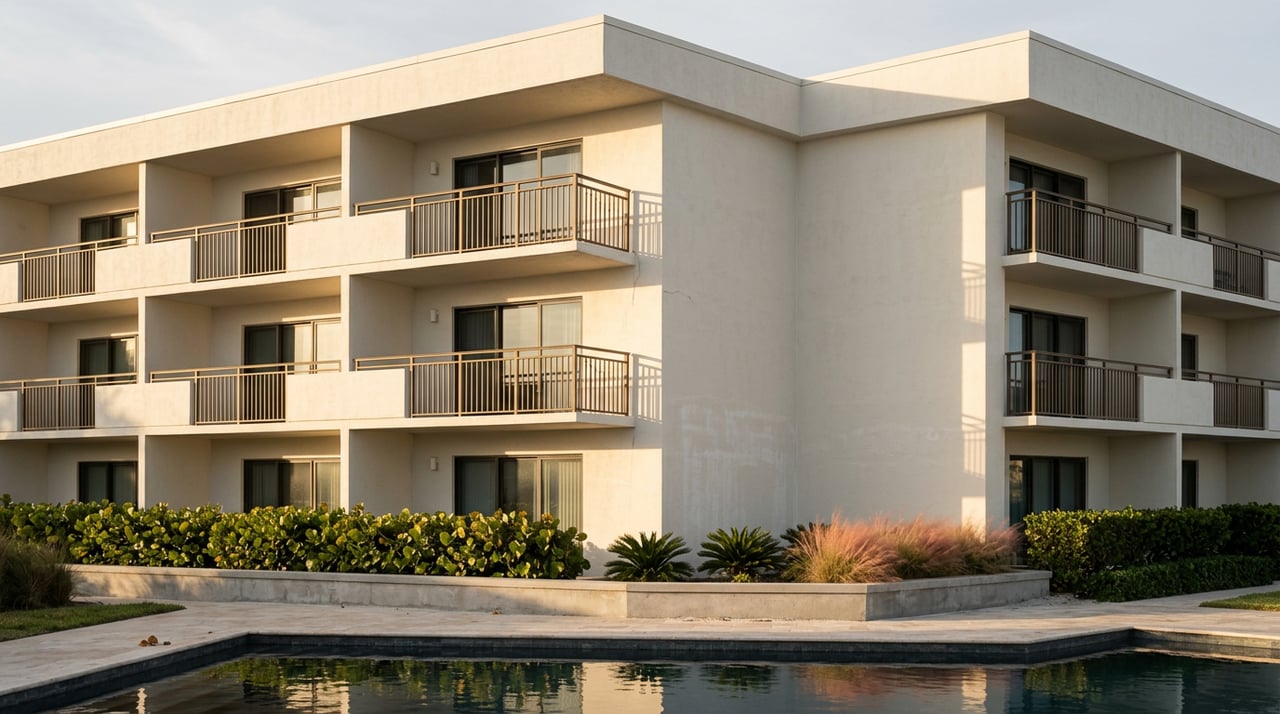
A two-bedroom condo at 8475 W Gulf Boulevard on Sunset Beach hit the market this year with an unusual concession built into the listing terms. The seller agreed to pay a $6,700 special assessment at closing, folding the building's catch-up cost into the deal before a buyer even had to ask.
A few miles up the same stretch of Gulf Boulevard, a listing at 11000 Gulf Boulevard is selling itself on the opposite fact. Its marketing copy states plainly:
Milestone Inspection and Structural Integrity Study are complete with full reserves.
Two condo buildings on the same barrier island, separated by a few thousand feet of coastline and one very different sentence in their listing description. That sentence is starting to matter more than the view.
Florida's post-Surfside condo safety laws have been phasing in for four years, but 2026 is the year they stopped being a future concern and started showing up directly in Treasure Island purchase contracts. Whether a building has completed its milestone inspection and its Structural Integrity Reserve Study, commonly shortened to SIRS, is now doing more to set the price and the timeline on a condo sale here than square footage, floor level, or how close the balcony sits to the sand.
What Actually Changed, and Why It Hits This Island Specifically
Florida law now requires any residential condominium building three habitable stories or taller to complete a milestone structural inspection once it reaches a certain age, and to keep a SIRS on file covering the building's roof, load-bearing structure, plumbing, electrical systems, waterproofing, and windows. The age trigger is 30 years from the certificate of occupancy, or 25 years if the building sits within three miles of the coastline.
Treasure Island is a barrier island. Nearly every condo building on it sits well inside that three-mile line, which means the shorter 25-year clock applies almost across the board. Buildings that many owners assumed had another five years before any inspection was due are finding out they were wrong.
The statewide deadline for that first SIRS was December 31, 2025, for associations that existed before July 2022. Boards that also had a milestone inspection due on or before December 31, 2026, got a narrow extension to complete both at the same time, but no later than that date. For a lot of Treasure Island associations, that extension window closes at the end of this year, which leaves a matter of months from where we stand today.
Once a SIRS is complete, the law no longer lets owners vote to waive or underfund the reserves it identifies. For decades, boards kept monthly dues low by voting to skip full reserve funding. That option is gone for the structural components the study covers. Buildings that deferred it are now catching up all at once, through higher monthly dues, special assessments, loans, or some combination of the three.
The City of Treasure Island's own building department maintains a page on milestone inspection requirements for local associations, which is a good first stop if you want to see how the city is handling notification and compliance. The state's own condominium inspection guidance through the Department of Business and Professional Regulation lays out the underlying deadlines in more detail if you want the primary source.
The Split This Creates
The practical effect isn't uniform across every building. It splits the market into two very different risk categories, and the difference shows up in ways a buyer feels immediately.
| Building has completed SIRS and milestone inspection | Building hasn't completed one or both | |
|---|---|---|
| Financing | Eligible for conventional, FHA, and VA loans | Often flagged non-warrantable, shrinking the buyer pool to cash offers |
| Insurance | Carriers price the building on documented condition | Carriers may decline to renew or price defensively without data |
| Special assessments | Funded gradually through reserves, fewer surprises | Catch-up assessments often land as a single large bill |
| Typical seller experience | Documentation becomes a selling point | Buyers negotiate price down or walk during due diligence |
Reports from firms tracking this statewide put the special assessments tied to reserve catch-up anywhere from $10,000 to well over $100,000 per unit, depending on how underfunded a building was and how much structural work its milestone inspection turned up. The $6,700 figure at 8475 W Gulf Boulevard sits at the low end of that range, which is itself a data point worth sitting with. A building with a smaller catch-up bill is a building that hadn't fallen as far behind.
Local structural engineering firms, including EMA Structural Engineers and Florida Engineering LLC, have both built out dedicated milestone inspection services specifically for Treasure Island buildings, which tells you something about volume. This isn't a handful of buildings quietly getting their paperwork done. It's a lot of associations working through the same backlog at once.
What the 2026 Sales Numbers Are Actually Showing
Here's where it gets interesting for anyone watching price trends. Treasure Island condos that permit short-term rentals posted a median sale price of $655,000 in May 2026, up from $368,500 the same month a year earlier, a jump of roughly 78 percent according to StellarMLS data. Price per square foot rose to $472, up 22 percent year over year. Median days on market fell from 101 days to 51, cutting the typical selling window nearly in half.
It's tempting to read that as a straightforward story about a hot beach market. It's more useful to read it as a story about two markets that used to look like one. A single median doesn't tell you whether a fully-documented building and an undocumented one are moving at the same speed, and the honest answer is that they almost certainly aren't. A building that can hand a buyer a completed SIRS and a clean milestone report removes the single biggest source of financing delay and price renegotiation in a 2026 condo transaction. A building that can't is asking a buyer to close on faith that the assessment coming next year won't be worse than expected.
That split doesn't mean every corner of the island is moving at the same pace. As of early August 2026, the 33706 zip code that covers Treasure Island had roughly 474 homes active on the market with only about 15 percent under contract, a noticeably slower pace than the county as a whole. Rising median prices and shorter time on market for the buildings doing everything right can coexist with a slower-moving pool of listings overall. Both things are true at once, and the difference between them usually traces back to whether the building did its paperwork.
What to Request Before You Write an Offer
Florida law entitles a buyer to specific documents before a condo resale closes, at the seller's expense. If you're looking at a unit on Treasure Island in 2026, ask for all of it up front rather than waiting until the inspection period is nearly over.
- The declaration of condominium and current bylaws
- The most recent annual budget and financial statement
- The completed SIRS, or a written statement from the association that none has been done yet
- The milestone inspection summary, if the building has reached its 25 or 30 year trigger
- Any record of a pending, approved, or recently completed special assessment
- Confirmation of whether the building currently qualifies for conventional financing or has been flagged non-warrantable by a lender
A board that can produce all of this cleanly and quickly is telling you something about how it's run. A board that stalls, deflects, or says the information is still being gathered is telling you something too.
Reading the SIRS Itself
Getting the report is only half the job. A few things inside it matter more than whether the cover page looks professional.
- Whether the association's current reserves match what the study says they should be, or fall short. A gap here is the single best predictor of a future special assessment.
- Whether the milestone inspection stopped at Phase 1, a visual review, or advanced to Phase 2, which means an engineer found signs of deterioration serious enough to warrant testing. A Phase 2 finding isn't automatically a reason to walk away, but it is a reason to ask exactly what was found and what repairs are planned.
- The date the next full study or inspection cycle is due. A SIRS completed in 2023 with a ten-year cycle behaves very differently than one completed this year.
None of this replaces a conversation with your own inspector or attorney. It does mean you walk into that conversation asking the right questions instead of hoping someone else already asked them.
A Few Questions Worth Answering Directly
Does a brand-new Treasure Island condo need any of this? Yes, if it's three stories or taller. The SIRS requirement is triggered by building height, not age, so a condo finished in 2026 still needs a study on file even though its milestone inspection won't come due for decades.
Can I still get a mortgage on a building that hasn't completed its inspection yet? Sometimes, but expect more scrutiny and a smaller pool of lenders willing to write the loan. Buildings flagged non-warrantable by Fannie Mae, Freddie Mac, or FHA often narrow the buyer pool down to cash offers, which changes both your negotiating position and your timeline.
If my building already finished everything, does that actually help me sell? It should, and it's worth treating as a selling point rather than a footnote. A funded building with a clean inspection record removes the exact uncertainty that's currently slowing other sales on the island.
Treasure Island's condo market in 2026 isn't one market anymore. It's two, sorted by paperwork most buyers never used to ask about. If you're trying to figure out which side of that split a specific building falls on, or you're a seller wondering whether your association's compliance status is helping or hurting your listing, that's exactly the kind of question worth working through before you sign anything. Work With Tabatha Pankop to get a straight read on where a specific building stands before you make your next move.